

user research & prototyping
With a group of students I helped design an affordable student oriented marketplace platform — a place for post-secondary students to sell and purchase second-hand items with ease.
timeline — October to December 2023
my role — UX research and prototype development


read about the process

With the rising cost of living and limited student budgets, post-secondary students often struggle to find affordable essentials.
How might we ease the experiences of students selling and purchasing items online?
Our team conducted structured interviews with post-secondary students across various programs and years. We explored their buying and selling habits, safety concerns, and usability pain points when using existing digital marketplaces.
From our findings, we identified three key challenges:

1. The unanimity of users and potential scammers

2. Expensive and non budget-friendly prices

3. Limited convenience in location and delivery options
Using these insights, we developed user personas and task scenarios to guide our design requirements and feature priorities.

We sketched and prototyped multiple wireframes and low-fidelity mockups to visualize our solution.
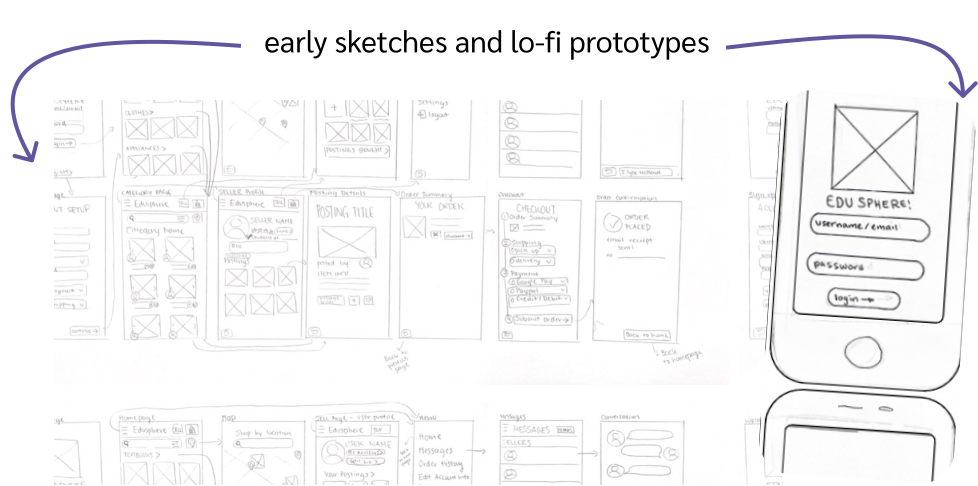
At each iteration, we conducted usability testing — including cognitive walkthroughs and heuristic evaluations. We focused on key user tasks:
Findings were measured using a to of heuristic violations. Results revealed recurring navigation and accessibility issues, which informed improvements in subsequent iterations.
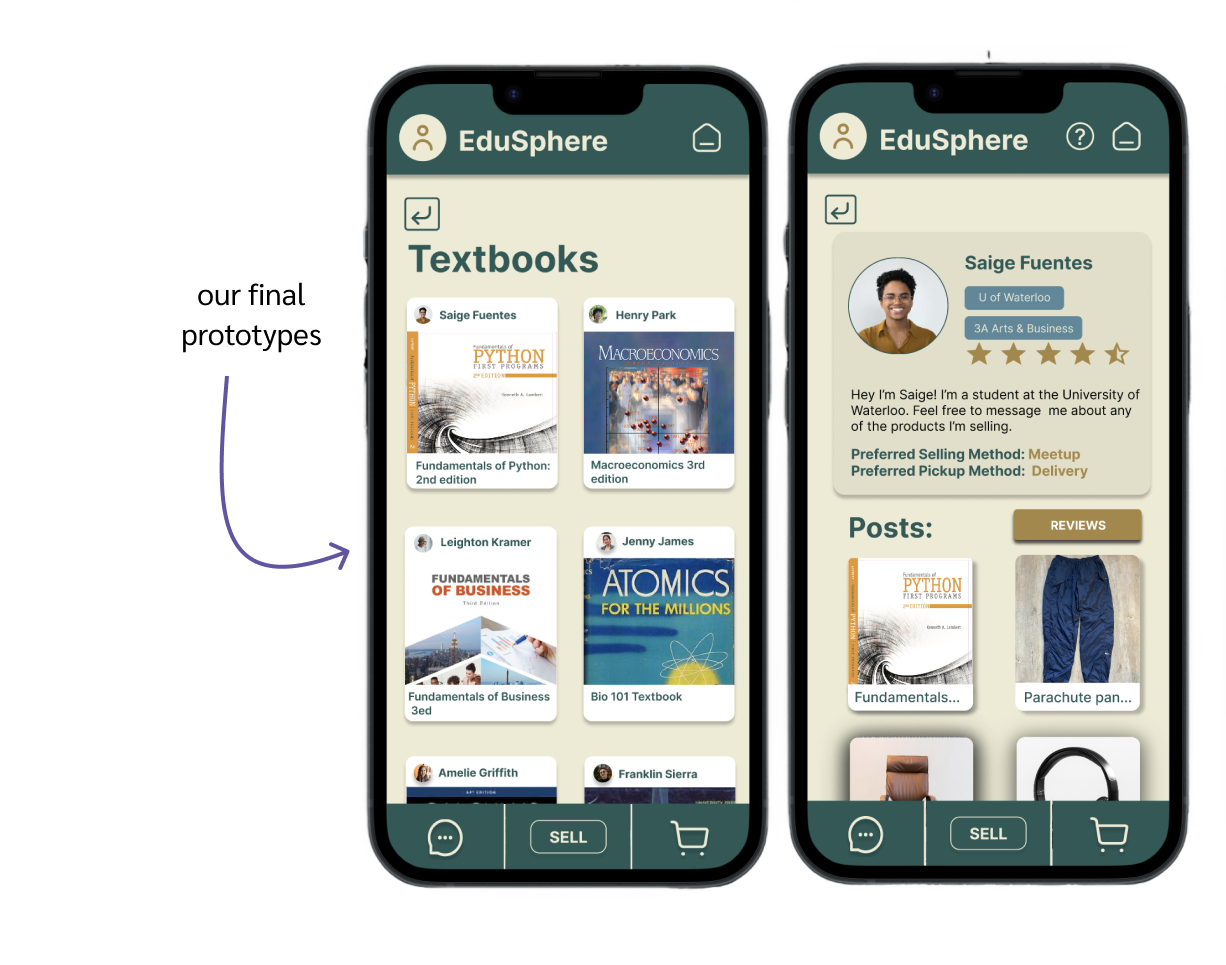
We designed EduSphere, a student-centered marketplace that enables post-secondary students to buy and sell second-hand items within their local communities — safely and affordably.
EduSphere reduces the risk of untrustworthy transactions and enhances convenience by connecting users through verified student profiles.
Designing EduSphere strengthened my understanding of the end-to-end UX process, from research and ideation to testing and iteration.
My biggest takeaway was learning how user feedback can shape meaningful design decisions. Building human-centered experiences requires continuous iteration — listening, refining, and designing with empathy at every stage.


